

Case of the month
A blood sample from a 9-year-old female Greyhound was sent to CanCan Diagnostics to monitor for minimal residual disease (MRD) following a diagnosis of osteosarcoma. The first liquid biopsy was performed after limb amputation and subsequent carboplatin treatment. At the time, no metastasis was detectable on CT.
The analysis identified five mutations (two in SETD2, and one each in PDGFRA, FBXW7, and DSP) alongside one copy number alteration (GLUD1). Based on allele frequencies, the mutations in DSP and PDGFRA were most likely germline, while the alterations in FBXW7 and both SETD2 mutations were somatic. These results indicated the presence of MRD.
A subsequent liquid biopsy was performed approximately three months later. It revealed an approximately 5-fold increase in the frequencies of all three previously identified somatic mutations, alongside the emergence of new mutations in TP53 (two) and TRAF3 (three). These results indicated disease progression. Furthermore, the occurrence of the new mutations—particularly TRAF3—suggested the potential development of a secondary cancer with lymphoma as the top differential. Mutations in TRAF3, FBXW7, SETD2 or TP53 are frequently seen in canine lymphoma, particularly in B-cell neoplasms. This possibility was highlighted in the diagnostic report.
Concurrent imaging revealed a mildly enlarged spleen and loco-regional lymph nodes. At that time, fine-needle aspirates yielded a diagnosis of reactive lymph nodes without evidence of lymphoma. However, the dog was ultimately diagnosed with clinical lymphoma three months later.
We would like to thank Dr Pamela Martin and Dr Jenny Helm from Vets Now Glasgow for sending the samples to us.
Connecting with the Veterinary Oncology Community at ESVONC 2026
We recently had the pleasure of attending the ESVONC Conference in Dublin, where veterinary oncology professionals from around the world came together to share knowledge, discuss innovations and strengthen international collaborations.
The event provided an excellent opportunity to engage in meaningful conversations with clinicians and researchers from across Europe, North America, Australia and beyond. We were delighted to host an international CanCan Diagnostics dinner, bringing together colleagues from the UK, Poland, Romania, France, Belgium, Switzerland, Canada, Australia, Mexico, Costa Rica and Spain.

A particular highlight was the presentation by Olivier Keravel of Eiffelvet who shared his clinical experience using the K9-LiquiDX®. Dr Keravel is one of the pioneers, who introduced our technology into his practice and tested it in over 150 cases to date. His insights demonstrated the growing impact of liquid biopsy technology in veterinary oncology and how it is helping clinicians make more informed decisions in daily practice.
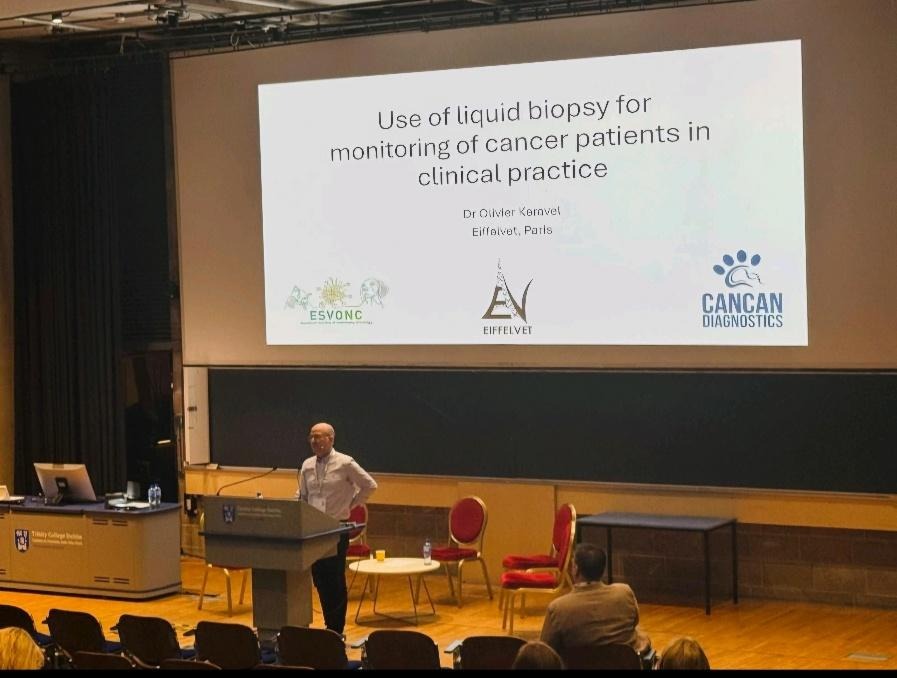
Throughout the conference, we enjoyed meeting both existing and new partners, discussing real-world applications of our testing solutions and hearing firsthand how liquid biopsy is transforming cancer diagnostics and patient care.
We would like to thank everyone who visited us during the event. Your enthusiasm, feedback and clinical experiences continue to inspire our work. We look forward to supporting even more veterinary professionals as they integrate innovative diagnostic tools into their oncology practice.
Thank you Dublin! See you at the next ESVONC conference, which will be in our hometown- Edinburgh!
Workshops in Romania
At CanCan Diagnostics, we believe that advancing cancer care starts with sharing knowledge and fostering collaboration across borders. We were proud to sponsor and support a veterinary oncology training session in Bucharest, Romania, led by Dr Olivier Keravel from Eiffelvet.
Hosted at dr Anca Cristea’s oncology clinic, the educational workshop brought together veterinary professionals eager to deepen their understanding of modern oncology practices and emerging diagnostic technologies. The program covered a range of topics, including general oncology principles, radiotherapy, tumor sequencing and the growing role of liquid biopsy in clinical decision-making.
The session provided a valuable platform for discussing how innovative diagnostic tools can support earlier detection, more precise treatment planning and improved patient outcomes. Participants engaged in interactive discussions and explored practical applications of advanced oncology techniques that are becoming increasingly important in veterinary medicine.
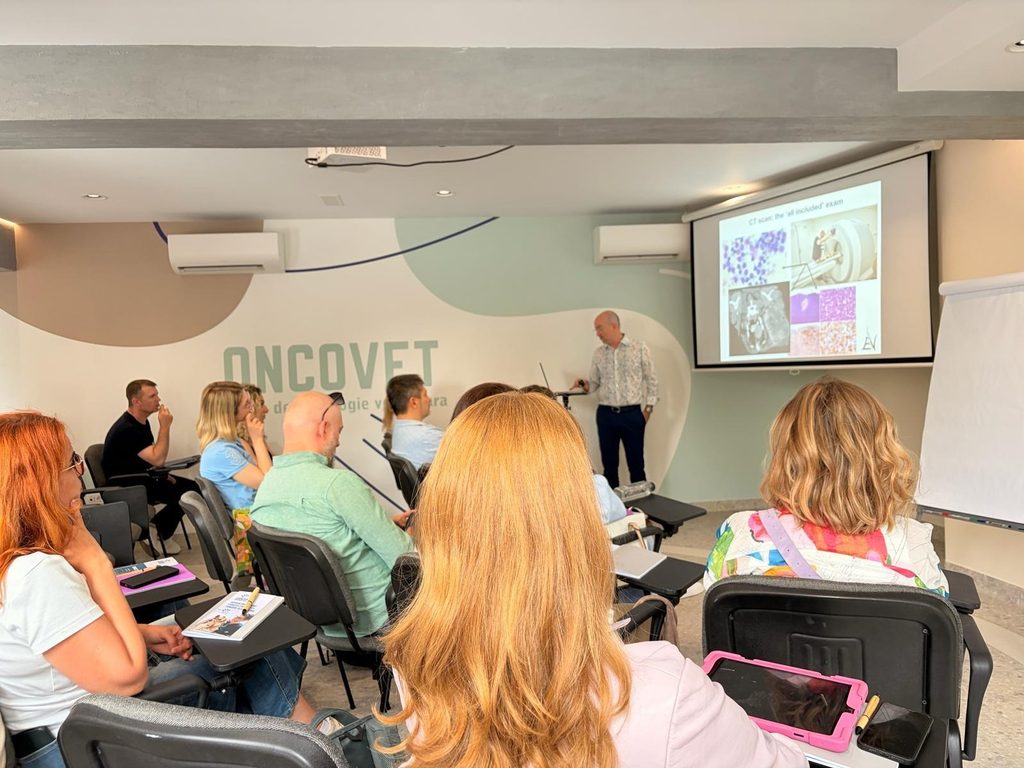
We would like to thank Dr Anca Cristea, Dr Bianca Baroiu and Oncovet team for organising the workshops.
At CanCan Diagnostics, we remain committed to supporting educational initiatives that help veterinary teams deliver the highest standard of oncology care to their patients.
Spotlight on Innovation: K9-LiquidDx™
Advances in veterinary oncology are creating new opportunities to detect and monitor cancer with less stress for patients. One of the most promising developments is liquid biopsy testing, which analyses tumour-derived DNA circulating in the bloodstream.
K9-LiquidDx™ is helping to change how canine cancer can be monitored and managed. Unlike more invasive diagnostic procedures test requires only a simple blood draw with no sedation or anaesthesia needed in most cases.
The process is straightforward: a blood sample is collected, securely shipped to the laboratory and analysed using advanced genetic sequencing technology. This enables the detection of circulating tumour DNA and provides valuable information that can support ongoing cancer monitoring and treatment decisions.
Key features of the technology are:
- it’s designed for monitoring of minimal residual disease and to detect even lowest amounts of tumour DNA in the circulation
- ultra deep sequencing- we sequence to at least 10,000x. This allows for reliable calling of even rare variants. In comparison, majority of commercially available tumour sequencing for dogs sequences at a target depth of 200-250x. Whilst it’s sufficient for tumour, where one mostly searches for therapeutic targets, in case of liquid biopsy it’s not enough as you need to have high confidence in low level variants.
- enriches for 75 cancer-related genes; it’s designed to be capturing alterations in a wide variety of cancer types.
One of the key advantages of K9-LiquidDx™ is its ability to help identify cancer relapse earlier than many traditional monitoring methods. Earlier detection can create opportunities for earlier intervention, potentially improving patient outcomes and enhancing quality of life for both pets and their owners.
In addition to relapse monitoring, the test can provide genetic profiling of a tumour, supporting more personalised treatment strategies tailored to the individual patient.
For veterinary practices, innovative diagnostic tools such as K9-LiquidDx™ can strengthen client confidence, improve patient monitoring and support better allocation of clinical resources. Most importantly, they offer another way to provide the highest standard of care for canine cancer patients.
As liquid biopsy technology continues to advance K9-LiquidDx™ represents step forward in the future of minimally invasive cancer diagnostics and monitoring.